Heavy Han Dynasty Armor: 汉重装

Music: Warriors
Art: Tiger Knight Empire War
One of the questions that gets raised in regards to the armor of the Western Han (the earlier of the 2 Han dynasties) is the relatively light armor of its soldieries in the funeral figurines and murals- especially when compared to the major eras that bookends it. The Warring States saw some of the heaviest armors in the orient during classical antiquity, and the period after the fall of the Han- that of the 3 Kingdoms period and ensuring high period of chaos in the century of fragmentation saw the rise of heavily armored cataphracts dominate the field. There then lies a curious question- given the enduring 4 century longevity of the Han- did it not have heavily armored soldiers like their predecessors? And if so, why are they not represented as much? The answer is very simple, they never left.


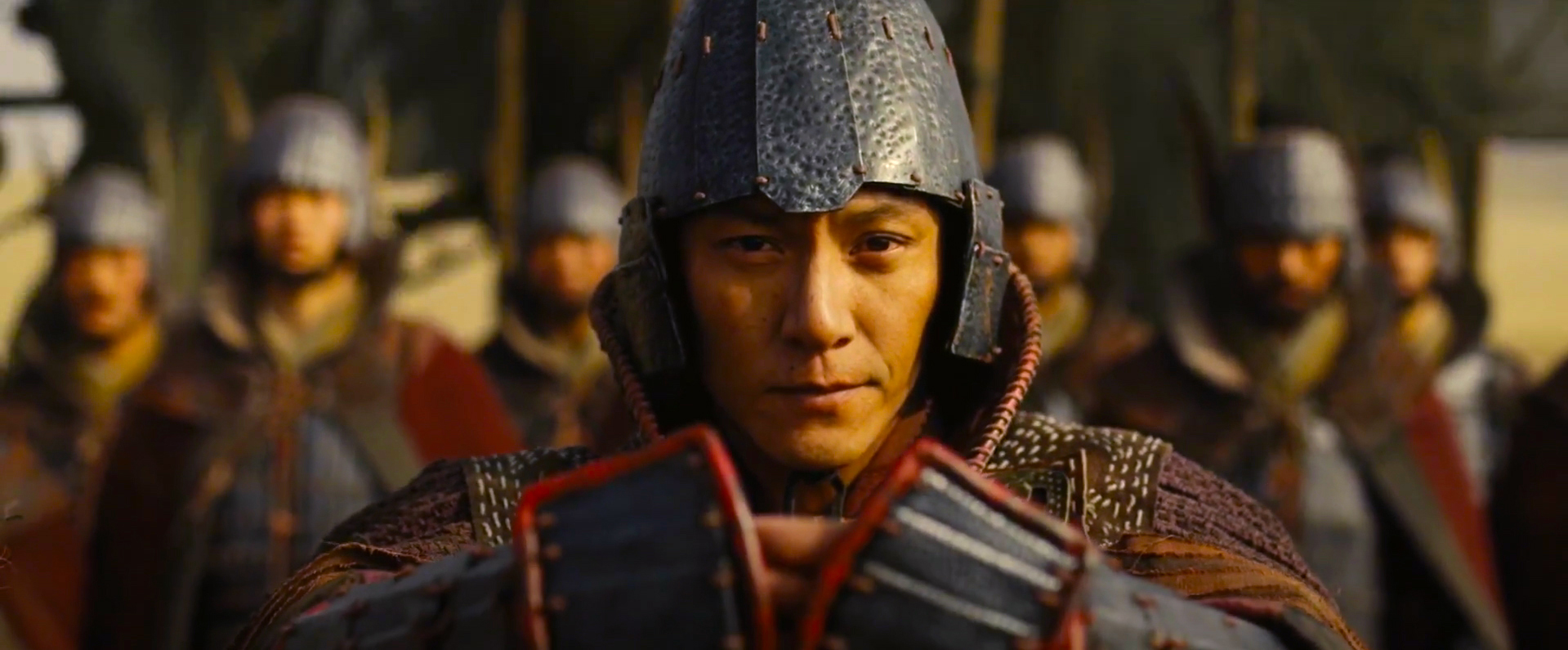
Heavy Western Han (202 BC- 9 AD) pikemen in heavy lamellar armor and lamellar helms that obscured nearly all save their eyes. Though the Western Han enjoyed significant internal peace and focused almost entirely on external threats- the various Han vassal kingdoms in its early period did maintain heavy troops, same was done by the strong Han core in the Guanzhong 关中 (lit. "Within the Pass" in Shaanxi) heartlands near the capital- which well retained heavy imperial mauls capable of easily shattering unruly vassals.

WESTERN HAN'S EXTERNAL FOCUS
.jpg)
.jpg)
Han's war is naturally irrevocably and inextricably linked with its willful war-like emperor Wu, whose long reign oversaw nearly half a century of active warfare against the Xiongnu threat and expanded the Han empire into modern northern Korea and northern Vietnam, securing what would become the Chinese interior and doubling his realm's size. Although the dashing new breed of cavalry dominated generals like Wei Qing and Huo Qubing are rightly given the limelight in remembrance, one should not forget that although this arm proved the most decisive new addition to the imperial war machine, the old still retained their great enduring power when needed. What works- per usual doesn't usually get re noticed but became part of the standard more.

By the end of Emperor Wu's over half a century of reign. Within, Wu saw his vassal "kings" well roped back into the imperial fold having neutered them from being a potential threat that reverted the realm back into chaos and without, the empire would have doubled in size and expanded on nearly all fronts becoming the preeminent power of East Asia (blue.)

.jpg)
One should also remember that by contrast, the steppe- nomad Xiongnu enemy the Western Han faced- and which Wu spent the majority of his reign contending- a not well armored. As such Han approach to trapping and countering this external threat often emerges in the form of long well protected expeditions deep into hostile territory, with their flanks well secured by the Han Great Walls, as such, for the majority of its troops, long distance striking power is prioritized, same with mobility, and volume of fire, and their relatively modest armors is already superior to whatever the Xiongnu possessed.

Han tomb relief depicting wars between Han soldiers and Xiongnu horse archers. Han soldiers are distinguished by their dotted scale armor surcoat while the Xiongnu are marked by their distinctive conical cap and recurved bow.
%20(1).jpg)
HEAVY ARMORS- A LINEAGE

Late Qin Dynasty Elite Vanguard- the Qin Ruishi: "Qin Sharp Vanguards"
Reenactors: 洪玮 Hong Wei (Formerly 柿子菌)
One should note that prior to the Western Han, the Warring States period and 3 Kingdom period was largely inward warfare, as in between blocks of Chinese factions fighting regional contenders, as such the armors used in those contexts were far heavier. The Han's panoplies were heavily influenced by predecessors in the Warring States period.
%20LATE%20Q.png)
Because warfare was greatly focused between competing Chinese kingdoms- each ruled by an authoritarian king who had centralized state power and boasted dense replaceable formations of large infantry and crossbowmen blocks- between such near equal competitors, heavy armor was needed to have a keen edge against their peers.

The crucible of the Warring States period (475-221 BC) forged a new kind of soldier. As the ritualized chariot battles of the aristocracy gave way to total war between massive, state-mobilized armies, the demand for highly effective and disciplined troops led to the formation of elite infantry units. These soldiers, distinguished by their heavy armor, rigorous training, and specialized roles, became the decisive edge on battlefields dominated by huge blocks of infantry and crossbowmen. Victory now depended on large, disciplined armies composed primarily of peasant conscripts. Within these vast hosts, elite corps served as the vanguard, the shock troops, and the anchor of the battle line. States like Wei, Qi, and Qin became renowned for their champion soldiers.

Reconstructed Qin Ruishi armor is based on stone plated helmets and armors excavated from Pit K9801 in the First Emperor's Mausoleum in Xian.
Archaeological finds, most notably from the Terracotta Army of Qin Shi Huang, show different configurations of lamellar armor corresponding to rank and unit, with some suits comprising over 600 individual pieces. The material of choice for the highest quality armor was rawhide, particularly from rhinoceroses, which were still present in parts of China at the time. Rhinoceros hide, when dried and lacquered, was exceptionally tough, capable of deflecting bronze-tipped arrows and the cuts of bronze halberds and swords, while being significantly lighter than metal armor.

Late Warring States/ Qin armor- a feature that many Qin and later Han armor demonstrated is that armors are made with a cuirass that can be worn like an article of clothing and with already- build in pauldrons (shoulder pads) that are sewn to the sides of the torso armor and can be unfasted with a knot in the right shoulder (East Asian cultures strictly prioritizes the right hand and given this preference would also make this flank the one that is not prominently facing the enemy.)
IRON VERSIONS- IRON LAMELLAR
.jpg)
Yan Kingdom Iron Lamellar Helmet
The introduction and proliferation of iron during the late Warring States period (3rd century BC)- as well as massed true cavalry revolutionized warfare, leading to significant developments in personal protection for soldiers. Alongside prized rawhide, armorers constructed lamellar suits from bronze and, increasingly, from iron. The growing prevalence of iron weapons and powerful crossbows necessitated stronger forms of defense, and metal lamellar armor provided a crucial advantage in the era's massive infantry clashes.
.jpg)
Reenactor: WuZhenTianWang-JieGe
Archaeological evidence confirms the use of iron for armor during this time. A pivotal discovery was made at the ruins of Yanxiadu (燕下都), the sprawling lower capital of the state of Yan in modern-day Hebei province. Excavations there unearthed an iron helmet (铁胄) composed of 88 individual iron lamellae, proving that the production and practical application of iron armor had reached a sophisticated level by the 3rd century BCE. The Yanxiadu site, a massive center for iron and bronze casting, yielded numerous iron weapons and tools, underscoring the state's advanced metallurgical capabilities which supported its military power.
.jpg)
Lacquered Iron and Lacquered Raw Hide Versions
The design should be familiar to those that would become standard in the later Han Dynasty. The armor was often assembled as a single, integrated suit encompassing the torso cuirass and shoulder pauldrons. This differed from later designs where the pauldrons were often separate pieces. The suit was designed to be donned like a jacket or robe (襦), fastening with clasps or ties under the right arm and at the right shoulder. This method of construction, seen in armor from the Western Han period found in the tomb of the King of Qi at Linzi, provided comprehensive protection for the upper body while maintaining a good range of motion for the wearer.
.jpg)
Other examples with far smaller open face aperture, these helms are built with a protective brow piece, a opening coincidenally reminiscent of Savoyard helms- and are worn with paddings beneath to protect against blunt trauma and chafing. Additionally the two cheek pieces are secured together via a hook and fastening.

A NEW DAWN
%20(1).jpg)

The annexation of the 6 remaining kingdoms ensured that China would be internally unified, and intra-state warfare within it was largely ended, despite rare rebellions in the 4 centuries of both Western and Eastern Han, internally the interior of the empire was secured, however it did not meant that the capacity and techniques were vestigialized.
%203%20(1).jpg)
China's early development of the blast furnace, a technology that evolved from earlier bronze-melting furnaces, enabled the mass production of cast iron by the 3rd century BCE. This industrial capacity allowed the new Han empire to equip its vast armies on an unprecedented scale. While cast iron itself was too brittle for high-quality arms, state-controlled ironworks processed it into wrought iron and true steel, materials ideal for the blades and armor of a professional army.
Music: 十五从军征 (Joined the Army at fifteen)
HEAVY WESTERN HAN DYNASTY LAMELLAR COIFS

This tradition of heavy head protection was inherited and advanced by the succeeding Han Dynasty (206 BC – 220 AD). Archaeological discoveries from Han Dynasty tombs reveal a variety of sophisticated iron helmets (铁胄, tiě zhòu). Examples recovered from sites like the tomb of a Chu Prince in Xuzhou and the Western Han tombs in Shandong show helmets built in multiple tiers, forming a protective dome that often extended down to cover the cheeks, ears, and nape of the neck. One common design, sometimes called a "wind-hat style helmet" (风帽式兜鍪, fēng mào shì dōumóu) due to its shape, offered substantial coverage, leaving only the central part of the face exposed. These helmets, which could weigh several kilograms, were worn over a padded cap or liner to cushion blows and prevent chafing.

The light and the heavy during Western Han side by side. Because of universal conscription service in its early phase- a holdover from the preceding Legalistic Qin dynasty- the system was designed to maintain a massive pool of trained soldiers while preserving the agricultural tax base. Standard military service applied to all registered male commoners starting at age 23 until age 56. A conscript (zhengzu 正卒) was required to serve a total of two years: After completing their two years of active duty, soldiers were discharged but not entirely free. They returned to their fields but remained in a state of reserve readiness.
They were required to assemble once a year in their local commanderies for refresher training and military reviews. This ensured that if an imperial crisis or large-scale invasion occurred, the state could instantly mobilize hundreds of thousands of combat-ready veterans. This was applied to all male except the top 9 ranks of the 20 existing meritocratic- based class of officials. However such a system- although working exceptionally well for defensive capacities, was ill- suited for prosecuting long offensives in lack of dedicated experience and the disruptive implication to economy as such by Wu's time focus was shifted to dedicated professionalization in key fields and for specific campaigns.
The Han military is often associated with the lighter-equipped, highly mobile cavalry forces needed for campaigns against the nomadic Xiongnu on the northern frontier. While true, the Han army was a diverse force. The existence of these heavy and complex iron helmets demonstrates that when the situation demanded it- for heavy infantry formations, elite guards, or crossbowmen who needed maximum protection in static positions- the state's industrial capacity could provide exceptionally robust equipment.

Art by 咪咪妈的刘sir.
These coifed helmets represent some of the most robust personal protection for the orient in classical antiquity, a direct reflection of the Han Dynasty's ability to field heavily armored soldiers for decisive engagements.

SCALE SUITS- WESTERN HAN IRON FISH SCALE ARMOR
.jpg)
Armor Made by: Harentang 函人堂 Studio
Heavy West Han dynasty iron fish scale 铁鱼鳞甲 armor recovered from the northern suburbs of Xian- or Chang'An, once the capital of the West Han dynasty. Constructed of many overlapping scales. The pauldrons are sewn to the scale coat and there is a scaled skirt sewn underneath the torso protection.
.jpg)
.jpg)


2 Reconstructed suits of Han dynasty armor. Rather than having separate articles, Han dynasty armors are frequently attached to pauldrons. The heavier armors have a full armored sleeve to protect against the usually vulnerable armpits of the lamellar wearer. Many Han armors, such as the 襟领铠 Jīn lǐng kǎi, "Collared" lamellar armor also have raised back and side collars to protect against glancing sword slashes towards the wearer's neck.

Heavier suits of these armors existed in heavier forms that covered the full legs as well- as exemplified by some Western Han era material culture discoveries.
LONG LAMELLAR STRIP HELMS

Heavy infantry of the Han Dynasty often relied on the large rectangular pavise-style shield as a cornerstone of their tactical formations. These shields were substantial, providing cover for the majority of the soldier's body, and were essential in countering the primary threats faced by the Han armies, particularly the massed archery of the nomadic Xiongnu.


Art from: 《三十六骑》(36 Riders)
Constructed from wooden planks, these shields were often covered in lacquered leather, which increased their durability and provided a surface for elaborate decoration. Archaeological findings and contemporary depictions show these shields painted with intricate geometric patterns, cloud scrolls, and zoomorphic designs in vibrant colors like red and black. The edges of some were frequently reinforced with a metal rim, and some featured a central boss, enhancing their defensive capabilities.


In battle, soldiers carrying these large shields would form dense shield walls. This tactic created a mobile barrier that was highly effective against cavalry charges and incoming projectiles. The front ranks would anchor the formation, their overlapping shields presenting a formidable obstacle. The stability of the shield wall allowed these combined-arms tactics to be employed with great effect. Formations could be several ranks deep, ensuring that if a soldier in the front fell, another could well step forward to maintain the integrity of the wall.
THE WESTERN HAN DOCTRINE- A "WARRING" STATE- OUTWARD

Having spent its first century building up its economy and bolstering the Han Great Wall- by the time Emperor Wu devoted the prosperous and populous state in external wars, it was able to do with with an extremely well secured flank that ironically shored off the once most dangerous exposed frontier of the realm. Contrary to misconceptions the wall was by no means a static line of defense, with often the Han settling large volume of settlers into newly conquered regions and the walls themselves proved a well anchored staging point for deep well organized offensives into the steppes.

Han dynasty Great Wall: The wall also extended across the back of the narrow Hexi Corridor and into the Tarim Basin itself, linking with key oasis cities of Loulan (Kroran) and Quici (Kucha.) It is paramount to note that the Tarim lap of the Han Great Walls were built directly into one of the most uninhabitable biomes on planet Earth, right across long stretches of the deadly dune sea of the Taklamakan desert itself. All parts of this network made clever use of the terrain and comprehensively connected northern China in one defense.
.jpg)

A digital reconstruction of a powerful Han dynasty fort/ garrison. This particular example does not have crenulated walls (chest high protections) and instead had man height walls with openings for crossbowmen to fire out. Though many other Han dynasty fortifications did have crenulated walls. Key aspect of the fort included a large courtyard where a stationing army could set up camp within and a castle like inner keep that is protected by an even higher set of walls.
LONG EXPEDITIONS, FORTIFIED WAGON TRAINS, AND FAST THINKING GENERALS
Emperor Wu's reign was definied by ambitious Han expeditions deep into steppe- territory led at the head by high initiative new breed of cavalry generals. Under the capable leadership of new generals like Huo Qubing and Wei Qing- in conjuncture with the newly reformed Han cavalry, the Han achieved a series of victories over the Xiongnu. In the Battle of Mobei, massed Xiongnu hordes of the Chanyu assaulted the Han forces in a deadly confrontation. Realizing the Han forces are at a major disadvantage being caught in the open flat lands, Wei Qing immediately ordered his chariots to deploy into a defensive line, where by his soldiers could take cover behind it and fire back.

Wei Qing ordered his troops to arrange heavy-armored war wagons known as wuguang wagons 武刚车 (lit. "Unyielding Fighting Wagon") into a large ring formations, that created a wagon fort whereby his infantry and cavalry hid behind. Wuguang Wagon 武刚车 from later dynasties: in this later version they are presented as a hybrid of a wheelbarrow and mobile pavise screen. As such, whole trains of supply wagons can~ if needed, quickly rearrange into a defensive wagon fort. Further it is likely the Han variants were larger in size.
.JPG)
%20-%20Copy.jpg)
%20-%20Copy.jpg)
Then, a sandstorm swept through the battle field. Wei- realizing that the storm camouflaged his soldier's ranks and also prevented enemies from coordinating their assaults, took advantage of the weather and counter attacked. Using the storm as a screen, the deadly onrush of Han cavalry eventually broke the Chanyu's army and the Han won the day.
%20(1).jpg)
The series of victories achieved by Wei Qing and Huo Qubing allowed the Han to sack the Xiongnu capital and return in triumph to the Han. Though the Xiongnu threat did not end with these series of very costly defeats, they did cement a prolonged Xiongnu decline in the following centuries. For the time being- Wu managed to double the size of the Han dynasty and irrevocably turning it into a centralized empire.


➢ ☯ Futsunomitama
➢ ☯ MK Celahir
➢ ☯ Muramasa
➢ ☯ Thomas Vieira
➢ ☯ BurenErdene Altankhuyag
➢ ☯ Stephen D Rynerson
➢ ☯ Peter Hellman
➢ ☯ SunB


Comments
Heavy infantry, mass conscription, the 20 Rank Order of Merit system of the Qin were all present in the Western Han Dynasty.
Will you be writing an article about the Han expedition to Dayuan, and the war fought against this remnant Greek population in Central Asia? What would have been like, Han Chinese VS Greek descendants of Alexander the Great's conquests? Did these heavy Han infantry units fight Greek hoplite and Macedonian phalanx formations I wonder ?? I think the Han eventually won and vassalized the Dayuan Greeks if I am not wrong ??
For answers- I doubt Han lost any edge-
The Chinese state went from being one of the last to adopt true cavalry, very late btw, in 3rd century BC- to- within 1 and half century directly taking a cavalry based army against one of the most powerful horse archer civilizations in Eurasia deep into its heartlands on the open steppes and putting it to remission.
~Given how steppe polities- until the invention of centralized states that were able to mass field muskets and cannons were one of- if not the singular most powerful force out there that can end a local region's civilizations in a blink of an eyes: just for reference, Xiongnus, Rourans, Turks, Khitans etc nearly all suffered major defeats and were a fractional shadow of themselves, then went west and became apocalyptic level of threats for there and were able to reemerge into a dominant player for centuries in their new incarnation (Huns, Avars, Cumans, Seljuks, Qara-Khitan) - and was never the other way around- there were *attempts* to have the hordes turn and conquer the east, but virtually all were but attempts: Tardu during Gokturks times, Seljuks tried with the emerging Qara-Khitai after the Liao remnants migrated there, Qaidu tried during Mongol's time, Timur when he sought to challenge the Ming, Galdan during his Dzungar times. All of these didn't came to much or something long term, where as the prevailing trend is always that the Altaic hordes in the east are often far more powerful than their western counterparts. After the Han it became an east > west trend for the steppe almost never the reverse.
~When Western Europe met the Huns Huns were able to be a major river of the Germanic peoples west in fear and the Huns came close to break western Rome's back and ravished much of Eastern Rome, but this incarnation (Xiongnu/ Hun) were remnants already beaten by the Han after Bang Chao shattered the Northern Xiongnu and sending their fragments fleeing west. So what made Rome fight for its life was a shadow that was already put to the sword in the east.
~Even by say more recent and famous examples it's telling too, Subutei and Jebe was able to like a knife through butter with around 2 then 3 Tumens tear through Eurasia, the chroniclers from Hungarians, Georgia, all describe the Mongols in apocalyptic terms, its able to destroy the combined princely army of the Rus, 2 royal armies, the hegemonic coalition army of Poland Silesia/ Moravia, the other Hungary (Legnica and Mohi happened just 2 days apart and the region's most powerful royal army with much of its panoply of high lords were crushed or killed) like a killing wind. Often it was 1 battle of annihilation and countryside turned to nightmare fuel. But even with the Mongols- having conquered much of Eurasia, when it fought the Southern Song? (an age where China is weak and fragmented, and a southern half of an already weakened Song, with a "weak" tinkerer bookish people and its soldiers are hated and generals are wrongfully executed- the Mongols at that height of that power still threw *90 Tumens against it and Song still lasted many decades? Really shows how even a weak Song was undervalued in hindsight, after all the Mongols certainly didn't brush it off- even *after they took most of the known Eurasia. And even when the Yuan took it by the time the larger empire was fragmenting, a southern Han- led China managed to be one of the first to reassert its independence and retake its old hold- even for a time into the steppe under Hongwu and Yongle. The "yoke"/ Appenage of the Mongols in other regions would still hold for centuries after that.
Long answer short I think a lot of popular perception really underestimated what China can do even in its regular form. If the enemy the Chinese state routinely contending with- when unleashed would showed up in the west into unstoppable horror shows- it really showed that being able to hold dance with it and contend with it, and still largely retain its native culture into modern day it got a lot of things right *from Han, and well before the Han- to now.
Well for one it was one of the regional fringe successesor states, given many Ionians who rebelled were sent to the other side of the world for the Persians when Alexander did find them and renamed his own polis in the region it's hard to tell just how up to date they were. Naturally they should not be underestimated, Seleucids and Mauryans did dance and they prevailed over other diadochis, and the Bactrians for a time held their own as well.
But the Han of this time was a different beast entirely too. As I said before, Chinese states were one of the last ones to adopt true cavalry (3rd century BC) so when China just began to adopt true cavalry, around the time of Battle of Maling in not even the late Warring States but middle Warring States, the Macedonians were proving themselves to have one of the best cavalries in the world. But- by the time Han did show up, this was after they had already gored the Xiongnu- War of the Heavenly Horses happened ~ 15 years after Wei Qing's battle of Mobei and after Huo Qubing already died, and well well after Han already learned how to outfight the best steppe empire of that age in its own home territory- with a robust military industrial machine and ability to replenish armies time after time.
*Key, I often don't lean into tactical and equipment as sole explanations of matters, this is because geometrically a large block of infantry armed with 1 handed sargaris and shields to a block armed with medium swords and shield were in such instances negligible. I do like to appreciate different aesthetics ofc- but it should be noted that the Han didn't write much of the equipage or ferocity etc of their contenders, meaning on some level its business and problem solving as usual for them, in sieges as well- say- compared to the walled Tarim Basin cities etc- Han did have wars and sieges with several walled Tarim states.
From a stately pov- well given the nature of Emperor Wu and Han (post Mobei Han btw) the outcome is not in that much of a doubt, Alexandria Eschate may be seen as the edge of the world to western classical antiquity and then Han edge of the world, was still largely a regional city-state with local influence, like many Tarim Cities it may have its layered defenses and inner city but its populace will be far smaller and if Han decided to do scorch earth in the region unroot their livelihoods. And given that Emperor Wu was a relentless warmonger who has time and time again both had the political will to dispatch long expedition columns and also spend massive wealth to mint a new army right after failture, the city probably did as much and as far as they could. Note that Han's 1st expedition wasp mostly challenged by supply and hostile march- but once this was remedied the latter attempt was so ruinous for the defenders they slew their king to please the Han as well as agreed to demand of horses. -with the side effect that many Tarim states later sought Han protection and client-hood. Seems like they were relative to such a remote post Alexander successor state.