The Kingdom of Chu (Warring States Period)- A Detailed Profile: 南方盛景:楚国- 概览

Music: Unifying the Tribes
800 years of history, 1 enduring dynasty,
the once- "Barbarians" who mastered the game,
at the beginning of Zhou, as one of the last to fall,
the great southern rebel that became a foremost Hegemon

.jpg)
.jpg)
Nobleman of the Warring States period in elaborate zhiju robe with distinctive striped striations. The design is based on artifacts unearthed from the Mashan Chu Tomb, dating back to the Warring States Period. Fantasy painting. Mid- Below: Chu noblewoman in exquisite heavy set silk shenyi robe.
-2.jpg)
Art (Above): 白人阿又
Above: Reenactor: Jinnian007 (Rednote)

Silk. Gold. Lacquer

.jpg)
Founded at the very beginning of the Zhou dynasty in the 11th century BCE, the state of Chu- risen first as a Viscount then as a brazen kingdom- charted its own distinct course as the Spring and Autumn period gave way to the Warring States era. By then Chu had long cultivated a persona that was as dazzling as it was distinct from its northern neighbors. Situated in the fertile heartland of the Yangtze River, a region aptly called the "land of rice and fish," Chu was a powerhouse of material culture and unique traditions.
.jpg)
.jpg)
Its capital at Ying was the center of a domain rich in resources, but none were more famous than its silk. Chu's mastery of sericulture and textile arts produced fabrics of such legendary quality and beauty that they defined its identity, becoming synonymous with a culture that the more conservative northern states viewed as both alluring and dangerously decadent.


.jpg)

Top: Even in later centuries this region would often form a major breadbasket in southern China and was a vital conduit of all north to south riverine traffic which could then flow out east into the East China Sea through Nanjing or along the Grand Canal to Suzhou.


A female Chu shaman "Sorceress"
The material evidence unearthed from Chu tombs reveals a world of mature artistry. Archaeologists have recovered silk garments, though often fragmentary, that showcase an advanced level of craftsmanship. These textiles, preserved for millennia, include robes with flowing sleeves and intricate embroidery, often featuring the dynamic, swirling motifs of dragons and phoenixes. A quote from the 3rd century BCE Chu Ci (Songs of Chu) captures this aesthetic: "The people of Chu dress in flowing silks, their sleeves like swirling clouds, their robes adorned with dragons and serpents-even the nobles of Jin gaze upon them with longing."

The phoenix in particular was a paramount symbol in Chu, even more so than the dragon, representing a spiritual legacy that would profoundly influence Chinese art for centuries, thereby contributing to the dualist symbol of dragon and phoenix as contending but complementary peers.
.jpg)
The visual styling was complemented by masterful lacquerware, gold, and bronze work, all of which displayed the same fluid, naturalistic style that set Chu art apart. This penchant for luxurious, spirited living was noted by outsiders like the reformer Wu Qi, who, upon arriving in Chu, observed a culture that seemed bon vivant and perhaps undisciplined compared to the rigid hierarchies of the Central Plains states.
Music: Only This Green
UNIQUE NOBILITY

Gold inscriptions on bronze in the shape of bamboo, issued by King Huai of Chu to a vassal king under his rule. The Chu domains are vast- stretching along side either hinterland of the Yangtze river and various nearby rivers but is sparsely populated- as such maintaining the regions requires both faith in the integrity of local administration but also must ensure oversight that stays obedient to the central court in their lonesome distant posts.


Chu developed a system of governance and nobility that set it apart from the states of the Central Plains. Chu was among the first major states to move away from the traditional Zhou Dynasty feudalism, which granted hereditary fiefs to noble families. Instead, Chu's rulers began to appoint officials who were directly tied to and dependent on central authority. This administrative structure allowed for greater centralization and control compared to states like Jin, where powerful ministerial lineages eventually usurped the ruler's authority and partitioned the state.
STRONG CENTRAL ROOTS

Warring States era nobleman/ sovereign. Inspiration based upon silk painting depicting a man riding on a dragon.


Reenactor: 惜月寒
Chu was the first of the states that survived into the Warring States era to appoint dependent officials tied to central authority rather than to create hereditary nobles as fiefs- designating key figures with service based stipend earning positions (and highest dignified as Jun or "Lord") .

The Old Aristocracy. Hereditarily entrenched and will succumb to entropy. Since the establishment of the feudal system at the inauguration of the Zhou dynasty, most of the power of the realm lay in the patchwork of Zhou's lords. A critical weakness of this system is that after the bonds of personal loyalty inevitably dissolve between the liege and their vassals over many generations, eventually those vassals~ who essentially governed hereditary autonomous enclaves: nothing would prevent them from amass private power and displacing their rulers. Additionally, family (in this case clan) interests often comes first.
Worse yet, early Zhou nobles were largely immune to the brutal corporal punishments meant for commoners. Instead of physical mutilation, nobles were governed by a strict moral and behavioral code (禮, lǐ or "ritual"). For the noble class, punishment was highly institutionalized and generally meant redemption through fines or demotion. The Book of Rites - Qu Li records: "Punishments do not extend to the nobility."

However, by contrast the laws of Chu state were seen as strict as it stipulated that even if a prince violated the law, he would be punished without pardon. This indicates that the judicial system of Chu State possessed a certain degree of severity and progressiveness. Zuo Zhuan recorded that after the Chu Prime Minister: Mo'ao Quxia's campaign against Luo ended in failure, "Mo'ao hanged himself in Huanggu, and the other commanders were imprisoned awaiting punishment." Other Chu commanders who were forced to commit suicide or were executed due to military defeat included high Princes, nobles, and high-ranking officials were absolutely forbidden to rely on their status to break the law.
For Chu: Although in previous eras Chu had similar positions as the other central plains states- such as Sima (a title denoting the commander and overseer of chariots of the royal stable and other warcraft: akin to a position of marshal or constable- archaic: as in Count of the Stables.) some examples includes:
Zhigui: Jade scepter bearers
Zhibo: Silk bearers
Tonghou: Marquis-peers

Chu: the Royal Bough- the Xiong clan is vast, and its size ensured that regardless of the carousel and procession of fratricides and parricides, a Xiong sat at its throne regardless of circumstances. Where as other great states of the realm (including the 1st 2 Hegemon of the Spring and Autumn era- Qi and Jin were both eventually had their ducal house utterly displaced by usurpers- Chu remained ruled by Xiong until its last.) Chu always had its own unique systems and by the Warring States era it came even more something akin to a family's corporation- with the upper tiers freely able to appoint and undo ministers, while laterally a sprawling pool of lesser branches that were deployed in various regional "Lords" ensure there would be counterweights the king could use against ambitious appointed ministers.


The ruling house of Chu, the Xiong (熊) clan- literally meaning: "bear" with the ancestral surname Mi (芈), demonstrated remarkable longevity. While the royal house of Zhou saw its authority decay and the ruling families of states like Jin were ultimately destroyed by internal strife- divided between the 6 clans that became tis 6 ministeries and then when the 6 were reduced to 3 via intrigue and naked purges- Jin was partitioned by said 3 into Wei, Zhao, and Han. By contrast- the Xiong clan maintained its grip on power in Chu until its final conquest by Qin.


THE BEAR'S ROOTS

Animals- especially bears held sacred cultural importance to the Chu. The Kings of Chu bore the uncanny last name of Xiong 熊 (lit. "Bear,") because according to legends, one of its most illustrious ancestral chieftains was referred as the "Yellow Bear."


In contrast to the central plains houses which often avoid having too many children for fear of overlapping claims and also having dangerous amount of uncles to steal the throne, by contrast Chu's royal family was vast. It did ensure that during the Spring and Autumn era there was constant fratricide and parricide, but geometrically also ensured that regardless of the outcome, the kingdom as a whole was ruled by a Xiong.

The state bureaucracy included high-ranking positions like the Mo'ao and Lingyin (chancellor), which were often held by members of cadet branches of the royal house, such as the Zhao (昭), Qu (屈), and Jing (景) clans. However though technically the king have the power to appoint- many of such offices became de facto hereditarily held by key clans as salaried functionary- aristocrats.

The state-run handicraft industry of the Chu State was managed by an official known as the Gong Yin, or sometimes Da Gong Yin (Minister of Works). This position, under the direct control of the royal court, oversaw the various artisans responsible for Chu's highly developed craft production. While pre-Qin texts identify a similar role as Sikong (Minister of Works) and most central plains states during the Spring and Autumn period used the title Gongzheng (Master of Works), Chu maintained its distinct term for this vital economic administrator. The Gong Yin's sphere of influence encompassed the workshops that produced many of the goods for which Chu became famous, including intricate lacquerware and bronze vessels.
COMMANDERIES- THEATER COMMANDS
.jpg)
In military matters, Chu divided many regional military commands that covers several nearby territories. Commanderies~ or Jun 郡 in Chu were different from the commanderies of later, fully imperial dynasties which were more hybrid in military and civil matters. By contrast: Chu Juns were primarily large, localized military districts or frontier defense zones established along the marches or heavily militarized borders, particularly to the north against rival states in the Central Plains. Insight: The Noble Title: Jūn (君) meaning "Lord" and the Administrative Unit: Jūn (郡) meaning commandery or prefecture are of different characters.
BROADSWEEPING- COUNTY MAGISTRATES

Because of the extreme span of the Chu territories- Chu opted for appointed local magistrates yet they were defanged so as to rely on central authority for protection. As Chu expanded its territory, newly annexed lands were typically organized into xian instead of being granted as hereditary fiefs. In local governance, the Chu State pioneered the establishment of counties, or Xian 县, as its primary administrative districts. A magistrate, the Xian Yin, was appointed directly by the Chu king to govern each county. These appointments were non-hereditary, marking a significant development in the formation of China's centralized bureaucratic system and a departure from older feudal models. During the Warring States period, Chu's commanderies (Jun) primarily served military functions and did not constitute a higher administrative layer governing the counties, meaning the Xian magistrates reported directly to the central authority.
.jpg)
Rather than belong to intermediate hierarchies, Jun commanderies and Xian counties operated alongside each other laterally as separate territorial divisions answering directly to the central government. Historians note that Chu's implementation of the jun-xian system remained relatively limited and conservative compared to neighboring states. Because Chu encompassed a massive territory with a diverse array of indigenous cultures and powerful entrenched nobles, the central government could not fully strip the aristocracy of their localized power. Meaning beside the central Chu royal court, the various military commanderies that covered local military theaters, and the myriad counties there also exists many traditional tribal enclaves that served more like auxiliaries and vassals.


Above: a modern recreation of the type of Qū jū 曲裾 dress. Qū jū 曲裾 largely wrapped around the woman's body while being secured by the tight belt around her waist.


Above & Below: Chu Noblewomen. Zhí jū 直裾, "Straight Uniform" worn by both sexes and was seen as a very informal and ubiquitous attire. The robe wrapped around the man's body while being secured by the tight belt. If the nobleman carries a sword, the scabbard's belt clip could be fastened on the belt.


POTENTIAL AND A POTENTIAL SNUFFED OUT
This practice of staffing key administrative posts with relatives likely reinforced the stability of the core ruling family, ensuring loyalty and preventing the rise of independent power bases that plagued their northern rivals. A notable, though temporary, exception to this system was the appointment of the Legalist reformer Wu Qi as chancellor by King Dao of Chu in the 380s BCE; his reforms, which targeted the entrenched aristocracy by lowering salaries and removing useless officials, greatly strengthened the state- yet in time would provoke a violent reaction that just may have snuffed out Chu's best chance of~ well, almost everything. More toward this specific and weightful topic will be examined in detail in the following sections.

MILITARY STRUCTURE AND CAPABILITIES


The military of the Chu state was a sizeable and formidable force, adapted to the geography of its southern domain: however it was often severely overstretched due to the very sparsely populated nature of the south. Chu armies were characterized by a strong emphasis on infantry and, most notably, the massed crossbow. The state was an early adopter and innovator of crossbow technology in general, and even in more esoteric developments was where the first repeating crossbow designs emerged- dated to the Warring States period. In battle formations, crossbowmen could unleash powerful volleys to disrupt enemy charges and provide cover from a reliably safe distance during sieges.

Chu also greatly favored crossbows- and together with the later states of Han and Wei became eager adaptors of massed crossbows in battle.

By the late Warring State's era both Qin and Chu had vast legions of armored crossbowmen.
It became a highly favored weapon by all the greatest kingdoms of this age.

With only 2 weeks of training or less, rows of crossbowmen could deliver volleys that ends the life of whole vanguards of aristocrats who had been trained in weapons their whole lives. China's iron age began much later than many of the other ancient civilizations, began in only around 9th century BC, however by the 4th century BC they have discovered steel forging techniques with temperatures reaching 1537 Celsius and casting liquefied steel weapons en mass with molds. This technique would not be matched in Europe until 1800 years later.

Chu Repeating Crossbow- one of the earliest dated repeating crossbows ever found. Such weapons does not have enough penetration powers and were likely used as hunting tools for nobles- and in later centuries (with poison dipped bolts) did became home defense weapons. These earlier configurations were largely still more- bow than later iterations, and was essentially a retractable bow laid out on the flat and pulled back by pulling the bowstring while holding the front via the grip. The magazine does facilitate rapid reload however.
WELL- VERSED SIEGECRAFT

Chu also developed significant capabilities in siege warfare, employing a variety of engines to overcome the walled cities of its rivals. Historical and archaeological evidence points to the use of battering rams (chui che), mobile siege towers (lú gōngchē), and massive, frame-mounted bed crossbows (chuángzi nǔ) capable of launching heavy bolts to clear defenders from battlements.

Foldable "Cloud Ladder" with hooked grapple for scaling walls. By this era Chu had became a very advanced state in siegecraft.

Observation carts had been recorded in this era.


Later 3 Bowed Ballista: 三弓弩 used in the later Song dynasty. However even by the early Warring States period- Chu had already fielded a simpler version of them that resembled large crossbows. Large mounted crossbows known as "bed crossbows" were used as early as the Warring States period. Mozi described them as defensive weapons placed on top of the battlements. The Mohist siege crossbow was described as humongous device with frameworks taller than a man and shooting arrows with cords attached so that they could be pulled back.


The first traction trebuchets (Mangonels) were also recorded and fielded in sieges of this era- also in the records involving Mozi and Chu manuvers against its rivals. In time more complex version of such mangonels would also be fielded, including versions where 5 throwers were attached to 1 swivel that could be turned to face various section of the enemy at once. Mangonel had several advantages over counter weight trebuchets of the medieval eras in that they were far easier to produce and also assemble on the field (attested in their uses by the cavalry- dominated Avars who likely brought them to Europe)- their downside consisted of shorter ranges and the diminished efficacy that are pegged to the crew's stamina.

CONTINUAL NAVAL DEVELOPMENTS

By the late Warring States period Chu was able to contend against the best naval powers in the region and came out victorious.


Complementing its land forces, Chu leveraged its position along the Yangtze River to build a powerful riverine navy. This naval power was crucial for controlling the extensive waterways of its territory, transporting troops, and projecting force against rivals along the coast, culminating in the annexation of the coastal state of Yue in the 4th century BCE after overcoming the once far better naval power upon the water itself.
CHARIOTRY


In contrast to its infantry and naval strength, Chu's chariotry was often considered moderate and less capable compared to that of northern states like Jin. The 3 main Chu armies of left, center, and right's elite core were chariot divisions and they were manned by sons of the royal clan. The central army of Chu also recruited its soldiers from the sons of the royal clan, was well-equipped, and represented the elite of the Chu forces. Although it was able to prove its worth during the 1st great period of prominence under the dynamic King Zhuang of Chu (often said to be the 3rd great Hegemon of the Spring and Autumn period) especially in his decisive Battle of Bi which came like a wrecking ball. However during Chu's period of contraction by the late Spring and Autumn periods (and after King Zhuang's wake) at the Battle of Yanling in 575 BCE, poor coordination between Chu's chariots and infantry contributed to its decisive defeat.

By the Warring States period, Chu was said to possess "ten thousand chariots." Each chariot was usually accompanied by a certain number of foot guards called tubing 徒兵 (lit. "follower guards"/ "Trabants," or "ground troops" lujun 陆军) , it would be their job to exploit any breakthroughs the chariots made. However the number of infantry guards were not fixed. They ranged between 10 and 100. Ten footmen was the usual number of troops accompanying a chariot during the early Spring and Autumn period, and 75 was a common size in the late Warring States period for light chariots. The army of Chu- beside 75 was also known to have used 100 persons per chariot, but this was not necessarily adopted by other states. The chariot's prominence were decidedly displaced by organized blocks of disciplined infantry and crossbowmen, a trajectory that in fact well favored Chu.
.jpg)
.jpg)
Late Spring and Autumn/ early Warring States era chariots from one of the vassals of Chu, by this time both the horses and the riders were almost always heavily armored, with thick lacquered hide armors protecting the horse's front and sides heavy armor protecting the riders.

However, archaeological finds demonstrate that Chu and its vassals possessed high-quality military equipment. The tomb of Marquis Yi of the allied state of Zeng (also known as Sui), dated to around 433 BCE, contained an arsenal of over 4,700 weapons. The finds included suits of exceptionally crafted lacquered leather armors, bronze helmets, and even in fact chariot barding for the quadriga horses, many of which were produced in Chu arsenals. This discovery reveals the advanced panoply available to elite Chu-allied forces, indicating a capacity for well-equipped and potent military units despite any tactical shortcomings in chariot warfare and the need to often police and intercept enemies in a sparsely populated domain. Tangential: though this was a truism for much of Warring State's Chu history it does have a noted exception. After Chu's fall- the post- Chu patriot and "Hegemon King" Xiang Yu was an exceptional cavalry commander whose battlefield exploits were legendary even against far larger enemy contingents and seemingly impossible odds.

Charioteer's heavy armor- black lacquered hide stitched together with red silk. Hide armor during this period varied from ox hide and more expensive hides such as rhino that are almost definitely reserved for the aristocrats. The boots of some aristocrats are fashioned from white deer skin.


This bronze blade was once attached to the axle of a chariot wheel, and is known as a wei. It was used to keep enemy foot soldiers away from the chariot.
Music: Song of Divine and Human《神人畅》


Western Han Dynasty sculpture of a bear would likely have been part of a set of four, used as weights for the corners of mats used for seating. Bears were a favoured subject in the Western Han Dynasty. Al Thani Collection. Excavations in regions that made up the Chu Kingdom (such as modern-day Hubei, Hunan, and Henan) have uncovered 2,800-year-old bear skeletons in sacrificial pits, pointing to religious rituals where the bear was revered.

Antlered and tongued tomb sculpture made from lacquered wood and excavated from Tomb 1 at Tianxingguan, Jiangling County, Hubei Province. Unlike the purely Zhou- cultured states, who venerated ancestors and their spirits as well as sacrifices to heaven and adhered to ritues of propriety- Chu were animists and believed in spirits and had shamanesses.
A defining and unusual characteristic of Chu society was the honored and vital role of women in the spiritual sphere. While women in the patriarchal Zhou states were generally confined to domestic roles, Chu culture prominently featured female shamans, or wu 巫.
.jpg)
.jpg)
.jpg)
Below: Specialized Chu "Bird and Worm" seal script- very unique in styling and often
enlivened by working the characters's strokes so they resemble the shape of birds or snakes
that has visible eyes looking back or stylized feathers. After China's unification-
the Imperial Seal was likely made with this script in its carving's proclamation


These sorceresses were not fringe figures but central to the state's religious life, acting as intermediaries with the spirit world. They performed ecstatic dances, interpreted dreams, healed the sick, and were believed to command supernatural powers, even becoming invisible or being carried away on clouds. This shamanistic tradition, with its deep folk roots, infused Chu culture with a mystical and romantic quality, a stark contrast to the ritualistic Confucianism taking hold in the north. The wu supervised ceremonies, communicated with deities, and held a respected position that was largely unknown for women in other contemporary states.


.jpg)

Music: Destroying the Colossus
THE MOST DANGEROUS HOUR BEFORE WARRING STATES PERIOD
A NEAR DEATH


During the late Spring and Autumn period, under the decadent reign of King Ping, Chu's internal weaknesses were ruthlessly exploited by its eastern neighbor, the ascending (previously fringe) state of Wu. The animosity was deeply personal, fueled by Wu Zixu, a former Chu noble whose father and brother were unjustly framed and executed by King Ping. Seeking vengeance, Wu Zixu fled to Wu and became a key advisor to King Helü, masterminding a devastating invasion along with King Helü- as well as none other than the legendary strategist Sun Tzu himself- in 506 BCE.
.jpg)
The Wu army, employing brilliant strategies, shattered the Chu forces at the Battle of Boju, captured the capital of Ying, and forced the young King Zhao of Chu to flee for his life. Wu Zixu famously exhumed King Ping's corpse and had it lashed 300 times as a final act of grim and hateful revenge. This audacious invasion gutted Chu and destroyed its royal army and sacked its capital, -and eventually cementing Helü's legitimacy to be raised as the 4th Hegemon of the age in some accounts. Chu then was on the brink of utter collapse.

There is very convincing argument that in fact Sun Tzu did not exist at all and was a later invention by one of the Sun clan's descendants in a later era. What's more the figure of Wu Zixu was likely the true template for his character and biography.
.png)
Yet, Chu was saved from annihilation. King Zhao, though driven into exile, proved a resilient leader. While his minister Shen Baoxu secured critical military aid from the state of Qin to completely repel the invaders, King Zhao began the arduous process of recovery.
RESTRENGHENING
.jpg)
.jpg)
.jpg)
.jpg)

Under his reign and that of his son, King Hui, Chu embarked on a period of strenuous convalescence and shrewd diplomacy. A key element of this strategy was a long-term alliance with the state of Yue, the southern rival of Wu. By supporting Yue, Chu engaged in a proxy war that kept Wu preoccupied for decades.


The Kingdom's Helmet- the Chu "Square Wall"- a factor of Chu's security at this critical time was owed to the old "Square Wall" that was constructed in previous centuries. Chu had been one of the 1st states to construct what one would imagine the later Great Wall could be- and they did so with dedicated ambition that sought to connect a sprinkling of mountains and hills leading into the flat central plains into 1 iron bulge and have this line of fortifications plug the critical gap between the great Qinling Mountains running from the west and Dabie Mountains running to the east. The wall also allowed Chu to vitally entrench up a large vulnerable farmland sector in what is today's Nanyang Basin in southern Henan- Hubei transition area.


The region~ the size that corresponds to modern Belgium or Slovenia (or Connecticut) is vital in multiple senses, not only was it a vital bread basket, but also where half a dozen south flowing rivers all converge like that of a coalescing bough of a tree as it represented the lowest dip between Qinling Mountains and Dabie Mountains in topographical depth, for this reason, in ancient times all traditional north to south traffic that is in China's interior must pass by this riverine gap. The region was vital to north- south China's conduit well until the time of Yue Fei (who made Xiangyang his headquarter) and later dynasties. Because of this well- secured anchor against northward invasion- Chu- with initiative restored was free to instead expand laterally in either east and west using the Yangtze.

An Expressive, Happy Bear- Gilded Bronze: Western Han Dynasty.
This farsighted policy paid off handsomely. In 473 BCE, Yue finally conquered and extinguished Wu, removing Chu's greatest nemesis permanently from the board. Unshackled from the threat of Wu, Chu's power rebounded with astonishing speed. King Hui annexed the states of Cai and Chen and began expanding west into the territory of Ba and north towards the Central Plains, proactively asserting control over the vital river systems that flowed to the coast to always hold the iniative to the coast- well hedging power in Chu's favor in the eventuality of a war with Yue.
This resurgence again transformed Chu into the unrivaled superpower of the south. By the dawn of the Warring States period, it was one of the largest and most powerful players on the board, its immense territory and resources ensuring it would remain a dominant force for the next two centuries until its final conquest by Qin.

.jpg)
At the entrance to the Warring States era- Chu's kingdom- wide strength had greatly recovered. Its agricultural yield was strong, its territories large, its militaries capable, and above all, its leadership stable. During king Zhao's reign as well as that of king Hui's the royal clan was well protected by a procession of deeply loyal uncles and trusted cousins (especially the Shen clan- of Lord Ye) whose members saved the state from various crisis to ensure rightful rule remain in the hands of its ambitious monarchs. Despite this immensely solid head start- ensured and guaranteed by a respectable procession of loyalists and long visioned monarchs- Chu would squander this critical initiative.


Enshi Grand Canyon- Chu's western forbidding border with Sichuan and the Ba Shu states.

Music: Martial Art Master
WHAT COULD HAVE BEEN

A late Warring State period aristocrat in silk shenyi robe.
Reenactor: 晴南

"For of all sad words of tongue or pen, the saddest are these: 'It might have been!'"
- John Greenleaf Whittier in his 1856 poem Maud Muller:
Histories often rarely gifts things on a platter for various nations who are hankering for such miracles. However- Chu stood as one of the few states that was indeed presented with such a cast- nearly half a century before the like of Shang Yang totally remade Qin and forever changed its fortune as well as irrevocably changed the course of China. It is here one should examine a key point in Chu's history where its destiny into the Warring States, as well as China's character could have been radically altered.
.jpg)
Purposely selected, rigorously trained, and superbly equipped. As full salaried full time professional troops: the Wei Wuzu proved their efficacy in over 70 victories in challenging and crushing the then greatest military power of the realm.
.jpg)
"Chu's military formations are complete but cannot be maintained for long... The Chu people are soft and weak. Their lands stretch far and wide, and the government cannot effectively administer the expanse. Their troops are weary and although their formations are well-ordered, they do not have the resources to maintain their positions for long. To defeat them, we must strike swiftly, unexpectedly and retreat quickly before they can counter attack. This will create unease in their weary soldiers and reduce their fighting spirit. Thus, with persistence, their army can be defeated."
-The famed strategist- Wu Qi- who personally rose the 1st legendary elite formation of the Warring States period- the Wei "Marital Troops" or Wei wuzu, sheperded Wei's rise to become the first undisputed hegemon of the warring states period. However- despite his meritorious life long dedication to Wei- he was eventually framed for intrigue at the Wei court and had to escape to Chu- a nations that he once derided.
.jpg)

He was welcomed at Chu by King Dao- and implemented similar meritorious reforms in Chu- allowing it to join Wei as one of early Warring State period's more talent- based states, leading to Chu winning several wars against its neighbors and proving the merit of his methods. However despite his great personal contribution, for having reduced much of Chu's old hereditary nobles, he was deeply despised by Chu's nobility. In truth- despite having a mechanism that insured collective loyalty to the enterprise, the reality of many hereditary ministerial clan resulted in liberal corruption and graft that is able to be protected from fathers to sons and far down the line. What's more threatening stipends and legalized trickledown corruption meant many families- whose existence was riveted to such postings became threatened of being displaced altogether.


Map: Geography & Trajectory- given the radically varied mountainous terrain of southern China compared to the central plains- traffic is strongly channeled along a main lateral body of water in the great Yangtze river and its hinterlands. Any power that controlled the Yangtze and the various gauntlets and lakes becomes the master of dictating initiative in the south. With the Square Wall securing the northern approach- Chu's ambition in the 300BC was focused on creeping east and holding the upstream headwaters of the various river that flowed into the coastal lands that is now resided by Yue. Though this inexorable eastern march to conquer all the way into the coast did pay off, for having kept its attention to the east, it missed the major metamorphosis in the west.
Music: The Grand Ceremony of Qin
A LATE CRUSIBLE FOR CHU- WHIRLWING OF THE END GAME


Qin's Societal Breakthrough: Achievement or Abyss. Shang Yang believed in the importance of meritocracy in selecting officials and bureaucrats. This helped to create a more efficient and effective bureaucracy, and ensured that the most capable individuals were put in positions of power. Private ownership and businesses are tolerated > but only if they aid in the state's interests. Those who repeatedly failed in their farm quotas, in military leadership, will be denoted, those who fails repeatedly and catastrophically will be demoted into slaves and sent for manual labor.
Unfortunately for Chu- because of its pro- entrenched aristocrat obstinacy- the initiative, and the decisive trajectory of development was aggressively taken by another. Under the formidable minister Shang Yang- the neighboring state of Qin (ironically a centuries long Chu ally and the one that saved it during its darkest hour from Wu's invasion) completely transformed its society from the ground up- Qin abolished its entire aristocracy and demanded that only path to advancement be achieved from merit only- including its potential crown princes.
.jpg)
.jpg "However, although both Gongsun Yan and Zhang Yi were natives born form Wei, they held radically opposing views. Zhang was a strong believer in the opposing Horizontal Alliance School and encouraged that Qin's King Huiwen should greatly strengthen Qin, and when it comes to a possible war expanding Qin reach beyond the Hangu Pass in its eastern extreme border and breach into the Central States (like Wei, Zhao, and Han) Qin should feel absolutely free to annex those territories at Wei, Han, and Zhao's expense. Alarmed, Gongsun Yan fiercely protested these advices and the two bitterly argued before King Huiwen. But because Zhang's position faned King Huiwen's innate expansionary ambitions, Gongsun Yan was sidelined, and then, after much of his power was stripped, eventually he retired from Qin- calculating that he was in a dead end inside Qin but his power and vision may be used elsewhere.")

As such Qin became the most military formidable state in the realm and rapidly tripled in size in little more than a decade by absorbing both the kingdom of Ba and Shu in Sichuan in 1 rapid campaign. However before a possible any war was truly made between Qin and Chu- Qin actually baited and misled Chu via cruel deception. Qin - under King Huiwen falsely promised Chu to give some of their border territories to Chu, then deliberately reneged on the deal- Chu- rightfully livid, confronted Qin in invasion however Qin ambushed the expected Chu army twice, not only defeating it but also taking a large swath of borderlands for itself. The exact details are well covered in my previous chapter A Cruel Knife for Chu- a shorter but focused excerpt which talks about the various schools of diplomacy that influenced the final course of the Warring States late game.
TWLIGHT OF KINGDOMS: THE CHU SORCERESS

Chu's final decades were spent desperately implementing much needed reforms to various effects. However it does have one last tricks up its sleeve. Although King Huiwen managed to backstab Chu and take its old heartlands- his death, and the sudden death of his son made it possible for an opening to be exploited. The ascending Qin fell into a brief period of internal chaos and remission.


Of the potential candidates- the great rival powers such as Zhao backed the seemingly weakest candidate possible- a young boy still in his minors born to a fierce Chu mother- who has a large array of her brothers and other male relatives in the Qin court as high ministers. Thus- this compromise candidate that suited for other great powers was chosen and the true reigns of power laid within his regent mother and her brothers in the Qin court.

One of the first confirmed female regents in Chinese history was Queen Dowager Xuan- the wife of King Huiwen of Qin. And mother to the dynamic King Zhaoxiang of Qin. She held power for 2 years until he came of age, but even after his ascension, she and her clique of Chu aligned ministers held much of the real lever of power and ensured Qin would not harm Chu's interests, she held de facto power for decades in the Qin court. Unfortunately for her, the supposedly docile compromise candidate puppet that was her son proved to be a once in an age ruthless ambitious conqueror. King Zhaoxiang did everything he can to deprogram himself from his binds and displaced her from power and purged his court of his Chu- blooded uncles. Thereafter the Qin war machine, which had been neglected since his father's death, went on hyper drive.
SLAYER OF ARMIES
%20LATE%20Q.png)
With grim ruthlessness, Qin's dynamic and extremely long lived King Zhaoxiang then turned his ancestor's murderous war machine and embarked on nearly 40 years of continuous war against all of the 6 remaining kingdoms, at times with nearly half a million soldiers under command of the likes of once in an age generals like Bai Qi who helped him to break the bad of nearly all of Qin's most dangerous enemies...and was never defeated after over 100 battles and taking of more than some 73 cities (with combined recorded death inflicted over 1 million enemy soldiers.)


Qin's aggressive peers were each cruelly smitten on the field: at Changping nearly half a million surrendered Zhao soldiers were said to be buried alive by the victorious Qin soldiers. Qin then also formally toppled the Zhao throne and made its naked ambition of overwhelming supremacy well known, it also took Chu's ancestral capital of Ying which remained in Qin hands until this age's last days. And then- after 57 years on the throne, and most of them at war, King Zhaoxiang died in his old age. For a charmed spell it looked as if somehow the broken and thoroughly gored and battered realm may return to its old past.
SLAYER OF KINGDOMS

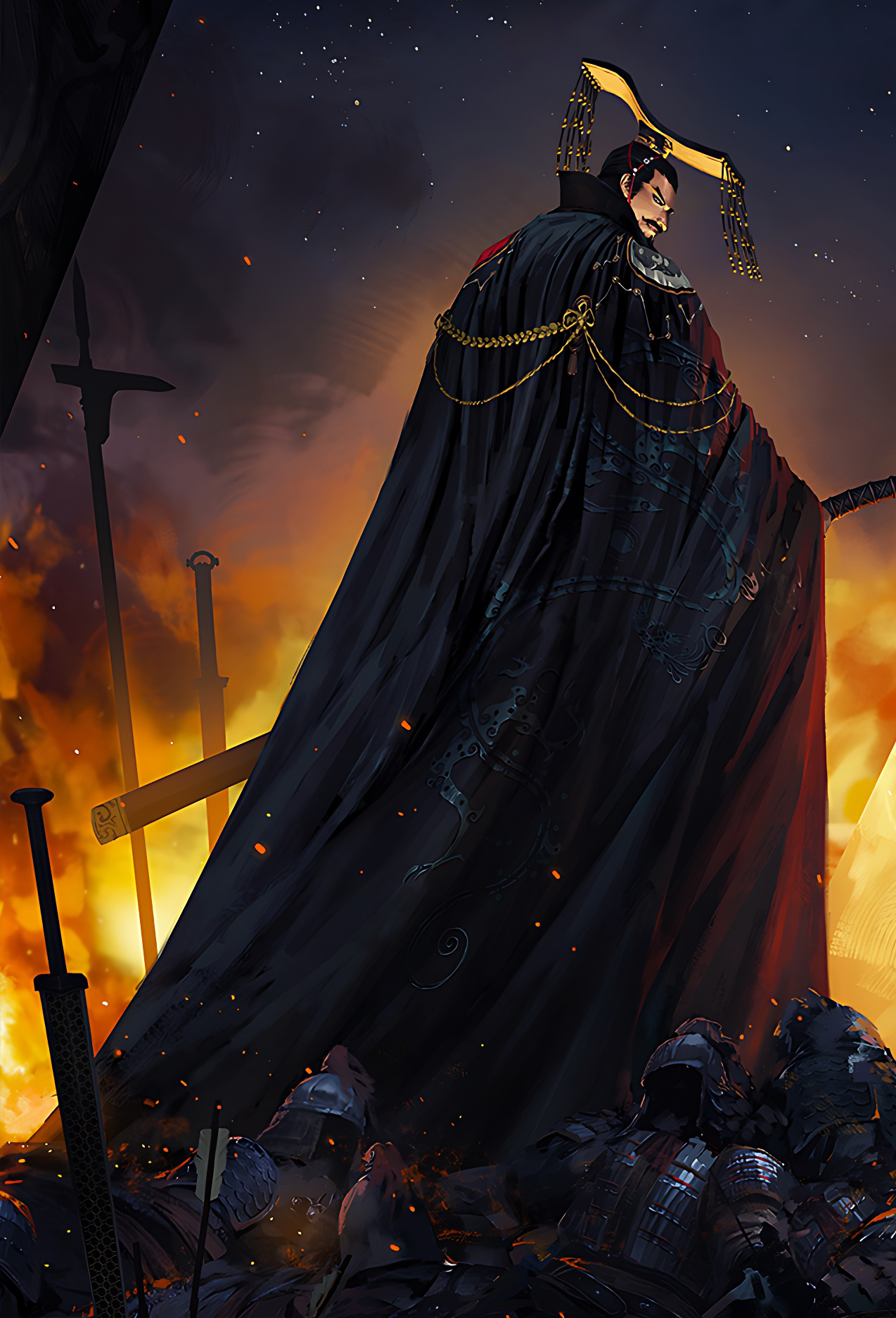
Unfortunately that figure did indeed arrive not too long after the great warmonger's death. Zhaoxiang's 2 successors died rather swiftly, because Zhaoxiang was already practically ancient by the time of his death, his heir managed to only rule a few years before his own death, and his heir- a previous minor prince also died not long after. By then the Qin throne was left again to a minor or virtually no experience and well- controlled by his Queen Dowager mother. Perhaps tragically for all that were not Qin- the boy had far more similarity to his great- grandfather than expected, and even surpassed him: after all he did crush all 6 other kingdoms and make himself the 1st Emperor of China.

Qin's administration contrasted sharply with Chu, and perfected and strictly centralized their own jun and xian administration- empowering the commanderies to be administrative as well as military but strictly appointed and answerable to a tightly reined central hierarchy- additionally the counties were made subordinate to the commanderies allowing the commanderies to marshal the production of counties and if needed- come to their rescue. Ultimately these measures allowed Qin to mobilize resources far more efficiently without taking account to patchworks of civilian and military division nor tribal regional enclaves and allowing it to vanquish Chu in 223BCE.
Music: Eternal Beauty
When the time comes we will of course cover the 1st Emperor's crushing and conquest of Chu in far greater detail (here is a already detailed article about the experience, integrity and armament of the Qin army by the time of the First Emperor Qin Shihuang's reign) but often pure dry lists and material culture's seldom enough to paint the vividness of what one may have felt from Chu's experience. This is- after all, an article devoted to Chu from its side after all.
.png)
A slightly earlier yet still poignant: famous episode that covers the final days of Chu involves the very talented poet and minister Qu Yuan 屈原. Qu Yuan lived during the later reign of King Zhaoxiang of Qin (First Emperor's great grandfather) according to Shiji- he was a loyal and talented minister but was slandered by dishonest factions at court and was punished by his king to be exiled abroad. He then wandered across the north and south of Chu's frontiers composing poems and also collecting folktales.


However- when he finally heard that the Qin army under general Bai Qi had breached into the Chu capital of Ying and took it- filled with despondency, and already suffering from a life time of depression, he committed ritual suicide by drowning himself in the Miluo River while clutching a heavy rock.


His tragic death is famously commemorated during the annual Dragon Boat Festival, where people traditionally race boats across the river to symbolize the villagers' attempts to save him by throwing rice puddings of meat to the fishes so they would not eat him- alternatively ward off poisonous spirits. People would also during this holiday eat sticky rice dumplings themselves. Meanwhile the 6 remaining kingdoms did all eventually succumb to their bitter fate.

%20(1).jpg)
.jpg)

Even after its annexation and seeming end, Chu had a peculiar revenge of its own, a sizeable influence of its own aethetics, norms, etc were passed on into Qin's successding dynasty of Han. After the collapse of the Qin dynasty- both of the 2 greatest rebels that topped Qin- Xiang Yu "Hegemon King of Western Chu" and the founder of the Han dynasty Liu Bang were both subjects of Chu.
.jpg)
%20(1).jpg)
.jpg)
.jpg)
Reenactor: gingweiliao_ (Rednote)
During the Han dynasty the area recovered greatly and became a very rich and leisure retreat- known as the Kingdom of Changsha, a vassal kingdom to the Han. During this time it was one of the most loyal of Han vassal kingdoms and saw some 4 centuries of internal peace and prosperity. With its population quintuple from the time of the establishment of the Han dynasty to 1st century AD. The region then became a province during the Eastern Han period- known as Jing province (Jingzhou.)


➢ ☯ Futsunomitama
➢ ☯ MK Celahir
➢ ☯ Muramasa
➢ ☯ Thomas Vieira
➢ ☯ BurenErdene Altankhuyag
➢ ☯ Stephen D Rynerson
➢ ☯ Peter Hellman
➢ ☯ SunB


Detail of a Western Han horse headpiece- in Chu style
.jpg)


Comments
https://www.travelchinaguide.com/images/photogallery/2026/life-like-charioteer.jpg
I truly have no idea why Chu clothing seemed something more attuned to the central plains and not the hotter and more sweltering Hubei Hunan biomes. Here are some distinctions and possible theories I will cite. Chu's elites likely have adopted very heavily of central plain's norms and these reflicts indeed a local rich material culture with high quality local silks, however the silhouettes are probably little different from the rest of the realm's further north.
For the rest of the subjects would be quite varied- note* in the 1st compilation of the Changsha kingdom (this region) in early Han it was mentioned that "half of Changsha are Man and Yi". (Man as in Nanman- like those tribesmen dotting the south along with the Yue and later some variation of them fought Shu during 3 Kingdom era) as such the Chu establishment are likely composed of a core of central plains/ semi- mixed elites who may be quite differently dressed that that of the plebian commons.
Other differences:
the common language of the Zhou- that of the Zhou court aristocrats 雅言 Yayan (lit: "Elegant Speech") was very different from these Southern dwellers: the language of Chu distinctively denoted as 楚言 Chuyan (Chu Speech) was incomprehensible to both the Zhou ears and in diction. Zhou people revered the spirits of their ancestors while the Chu revered animals.
~
However who knows, technically the other 2 great states of the late game also have their major "barbarian" quirks: Qin was heavily seen as western mixed descendant of outsiders- despite their origin likely born of Yan- transferred stalwarts but then mixed with Rong blood. Zhao too adopted foreign trappings- like nomadic people's dresses which may include the practice of putting the robe fold right over left than left over right as did central plains Han Chinese.
The climate by the time the Longshan culture became truly advanced and civilized to Shang and early Zhou though should be somewhat warmer than today, as- again the Henan region was even known to have many elephants and rhinos. Even today southern Henan can be unpredictable, it can grow palm trees but also ensure snow storms that blows through the region. Though I'd say for most of recorded Chinese history the Hubei region and nearby have always been a notorious heat trap- quite infamous in China as something akin to a cauldron.
During the Warring States period, the Yellow River flowed on a completely different course, emptying out much further north near modern-day Tianjin. Major rivers like the Yellow River (Huang He) and the Yangtze (Chang Jiang) carry incredibly high loads of silt and sediment from the Loess. Because the river deposited its silt elsewhere, vast areas of the modern North China Plain, which are bustling with cities and farmlands today, were actually open sea or marshland back then.
The coastline of the Yellow Sea and East China Sea has also advanced dramatically. Modern cities like Shanghai and areas deep into the modern coastal plains were completely submerged during this period. The present-day landscape contains many ancient features (such as mountains or temples like Langshan) that originally sat on islands off the coast but are now kilometers inland.
But they practiced appointing cadet branches to high office, interesting they didn't suffer the fate of the State of Lu, with the high offices made hereditary in these cadet branches.
The Mi surname did later gave rise to many common surnames, such as Qu, Xiang, Wu, Lan, Ma, Zuo, Jin, and Shangguan. And poet Qu Yuan originated from the Mi surname and the Qu clan- he was a noble exile after all.
As for the longevity of the Xiong clan- their organization and arrangement reminded me a lot of the mechanisms toward "absolutism" at the end of the medieval era, where the likes of great absolutist kings began to appoint more into position based on king's own preference in office holding (France after Louis 14th via noble of the robe and intendants, Austria under Joseph II, and also something akin to some existing to modern monarchies in the gulf.) More similarity exist to the latter in that like such modern monarchies in that it is largely a family enterprise, and run like a family corporation with many branches and sectors, however if muckraking or political transition occurs it is often framed as anti corruption, the validity and extent of which is often hard to know because its the most expedient claim to the public while such maneuvers are being run but likely quite so.
Though I will say despite my liking of junkers and how later on they were an important part of Prussia -> Germany's useful patriots- of the said above systems I rather prefer more organic ones that transcend even absolutism itself. England during the Tudors actually became an early example by largely focusing on the talented commoners and the lower gentry rather than the peered nobles, who......conveniently slaughtered each other nearly across the board in the War of the Roses.