Emperor Profile: Taizong Emperor of Tang- A New Golden Age: 唐太宗短记


Top: KOEI portriat. Mid: Art by: Jack Huang. Below: AI Portrait by 帧观-历史人物还原
Music: Silent Snow, Hidden Plum
A warrior, a ruthless prince, and an enlightened sovereign, Li Shimin 李世民, the future Taizong Emperor of Tang, was a figure of immense contradictions and monumental ability.
.png)
He was the principal sword arm of his clan that crushed its most dangerous rivals to unify all of China. A brilliant strategist who led from the front and a calculating politician who seized the throne through the blood of his own brothers. Yet, his reign is remembered as a period of exceptional governance and military supremacy that set a standard for future emperors.

%20(1).png)
Tang dynasty throne room
%20(1)%20(1).jpg)
.png)

He was both the Son of Heaven to the Chinese and the Heavenly Khagan 天可汗 to the peoples of the steppes, a dual identity he embodied with unmatched prowess.

THE HAMMER OF THE TANG

As the Sui Dynasty crumbled under tyrany and anarchy, the Li family 李, a Sui general's clan from the northern frontier rose in rebellion and made their bid for the imperial throne. While his father Li Yuan, provided the legitimacy and political acumen when the clan took the capital of Chang'an as their own, it was the second son, the young Li Shimin, who acted as the dynasty's martial spearhead.
 At just 18, he was already a seasoned commander, and his father unleashed him upon the veteran warlords who had already carved up their own kingdoms from the ruins of the Sui empire. His opponents were established commanders with vast armies and fortified domains.
Xue Ju (薛举), the Emperor of Qin: A fierce warlord who controlled the vital northwest corridor in Gansu. In their first encounter, a bout of malaria forced Li Shimin from command, leading to a disastrous Tang defeat at Qianshuiyuan where his subordinates lost over half their army. Returning to the front, the 19-year-old prince learned his lesson. He adopted a strategy of attrition, refusing to give battle and exhausting the enemy. When Xue Ju's son and successor, Xue Rengao, was finally engaged, Li Shimin personally led the charge, shattered his main force, and compelled his surrender.


Liu Wuzhou (刘武周) and Song Jingang (宋金刚): Backed by the formidable Eastern Turks (Gokturks), this duo swept down from the north, capturing the Tang heartland of Shanxi and forcing Li Shimin's own brother to flee. Facing this existential threat, Li Shimin again employed a strategy of patient defense. He established a strong position, wore down Song Jingang's supplies over months, and then launched a relentless pursuit when the enemy finally retreated, annihilating their army and reclaiming the entire territory.

The Black Armor Cavalry was personal raised up by the brilliant 18 year old Prince Li Shimin of Tang. The 玄甲军 Xuan Jia Jun or "Black Armored Army" were 1,000- 3,500 of the most dangerous horsemen bodyguards of the early Tang army. The young Prince Shimin not only joined his father's rebellion against the reigning Sui dynasty but he also prove himself to be a once in an age general on the battlefield.


Tang cataphract and foot guard: Officer of the Guard of Honour. Tomb of Princess Changle (长乐公主墓), Zhao Mausoleum
Wang Shichong (王世充) and Dou Jiande (窦建德): The final unification of the north required defeating its two most powerful players. Wang Shichong, a cunning former Sui general of Hu (western) extraction who led the imperial cavalry, held the strategic eastern capital of Luoyang- after he had murdered the last Sui prince and then declared himself emperor. Dou Jiande, a popular rebel leader, ruled the vast plains of Hebei with an army over 100,000 strong. As Li Shimin besieged Wang Shichong in Luoyang, Dou Jiande marched his massive army to relieve the city, reasoning that if Tang destroyed Zheng, his own Xia state would be next.
Music: Prince of Qin (Prince Li Shimin) Breaks through Enemy Arrays
Composed by the future Taizong Emperor's staff
HULAO- "THE TIGER'S TRAP" PASS- SPEARTIP THAT REUNITED CHINA

Art: by 战士K
Li Shimin in Tang commander's armor (with cape). He carries a long single edged cutting sword with ringed pommel ( ancestor of Heian Japanese swords Chokutō) a bow (in leopard skin wrap) and circular arrow case called hulu is strapped to his belt. Tang military boasted significant cavalry contingents- he carries a riding whip in his right arm.


The respective territories of Tang of the Li clan (Pink), Wang Shichong's Zheng (Yellow), and Dou Jiande's Xia (Orange) in 620. The Li family of Tang controlled mostly the northwestern sectors of the realm, Wang controlled the resource rich central five point of the empire at Henan, while Dou controlled the equally populous and fiercely turbulent province of Hebei. Comparatively, both Wang and Dou controlled the most prosperous, populous, and well defended regions of the empire, composing nearly 60% of the empire's population and respective industries.

%20(1).jpg)
This set the stage for Li Shimin's masterpiece: the Battle of Hulao Pass in 621. In a move of audacious genius, he left a smaller force to continue the siege of Luoyang while he took a mere 3,500 elite cavalry to block Dou Jiande's 100,000-strong army at the strategic pass. For weeks, he refused battle, studying his opponent. When the moment was right, he unleashed his attack. He personally led a small cavalry force to scout, then sent another to execute a wide flanking maneuver, creating panic in the Xia ranks. Seeing the enemy waver, he led his black-armored heavy cavalry (玄甲军, Xuánjiǎ Jūn) in a devastating charge that smashed into the enemy commander's headquarters.
%20(1).jpg)
The massive Xia army disintegrated. Dou Jiande was captured, and upon seeing his only hope defeated, Wang Shichong surrendered Luoyang and also was captured. With a single, decisive campaign, Li Shimin had destroyed two of the most powerful regimes in China.


Allies from Enemies: Many of the most important Tang inner cabinet were former generals and princes who had once opposed him. Four of his best generals, the 2 strategists: Li Jing, Li Shiji, and the 2 champions: Qin Shubao, and Yuchi Gong had all once fought for rulers that directly opposed the Tang. Each of them was either defeated and pardoned by Li Shimin, or was persuaded by his charisma to join the Tang cause. Because of this marked appreciation for such men of talents, these men would become the founding fathers and pillars of the Tang state: Two of them would become deified as Door Gods and still venerated today, and the other two would each be instrumental in taking down a powerful rival empire. Li Jing the Gokturks and Li Shiji the Xueyantao and also the Korean kingdom of Goguryeo. Of course they were only the most prominent ones to become leaders in Taizong's regime, many dozens of generals also reached prominence under the figurative wings of Taizong.
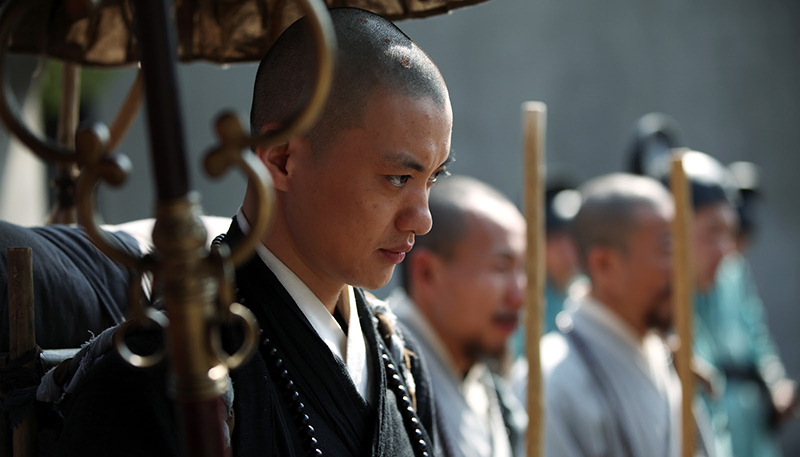
During his reign some of the earliest records of the famous Shaolin monks in combat was also reported, when the monastery- who deeply resented the Wang clan's confiscation of temples and monasteries sided with Li and fought on his behalf, taking a fort and were honored by Li in the future.
PATH TO THE THRONE: XUANWU GATE INCIDENT


Steppe polities often settled succession through violent conflict that were part of the naturalized fabric of politics. The act of brazen fratricide- especially that of ones born form the same mother, however, was a profound taboo in Confucian Chinese culture. Li Shimin did not get along with his younger brother, and his elder brother the then crown prince was greatly threatened by his younger potential replacement.
Li Shimin's unparalleled military success and the powerful faction of brilliant officials he gathered in his personal "Tiance Fu" (天策府, Office of Heavenly Strategies) made him a threat to his elder brother and crown prince, Li Jiancheng. The rivalry, stoked by their younger brother Li Yuanji, escalated into plots and assassination attempts.


The 2 princes began an extensive propaganda campaign against Li Shimin and framed him for a number of capital crimes. What's more, they deprived the prince of his famous Jet Black Armor Cavalry. Then, they began to transfer all of Shimin's best generals away out of the capital. On at least 1 occasion after sharing a banquet with his 2 other brothers Li Shimin succumbed to near fatal food poisoning which left him bed ridden. Fearing for his worst and knowing if their master is dead they would be executed- the prince's closest generals and advisors- many of whom had served him throughout countless dangers- petitioned for him to strike first.
.jpg)
%20V.jpg)
.jpg)
By 626, Li Shimin felt his life was in imminent danger. On July 2, 626, he laid an ambush at the Xuanwu Gate, the northern entrance to the palace. As his brothers approached, Li Shimin personally fired the arrow that killed Li Jiancheng. His general, Yuchi Jingde, killed Li Yuanji. His soldiers then entered the palace, and his father, Emperor Gaozu, faced with this bloody fait accompli, had no choice but to name Li Shimin the new crown prince. Two months later, Gaozu abdicated, and Li Shimin ascended the throne as Emperor Taizong. It was a brutal seizure of power that would stain his legacy, yet it paved the way for one of China's most celebrated eras.

REIGN: A GOLDEN AGE: HEAVENLY KHAGAN

As emperor, Taizong proved to be a brilliant statesman. He encouraged open criticism, famously tolerating the sharp rebukes of his former adversaries in the open- including many of his brother's former staff, even retaining several as his own key advisors without punishment. He encouraged open criticism, and drastically reduced corvee and capital punishment across the realm, even requiring those who are deemed to be sentenced for executions to have legal petitions resubmitted multiple times to ensure they are warranted of the punishment. Despite consisting of 1/4 of the planet of the population, at times across the empire Tang only executed dozens within a given year.


His genius continued to lay in grand strategy. Just months after his coup, with his throne still unsteady, the Eastern Turkic Khaganate launched a massive invasion, arriving just across the river from the capital, Chang'an. Taizong, in a stunning display of personal bravery, rode out with only a handful of men to confront the Khagan, negotiating a temporary peace. He never forgot the humiliation. Over the next few years, he exploited internal divisions within the Turks and rebuilt his military. In 630, he dispatched his top general Li Jing, who crushed the Eastern Turkic Khaganate, capturing its khagan and making Tang the undisputed power in East Asia. In the aftermath, the chieftains of the steppe tribes, recognizing his martial prowess and his understanding of their ways, offered him the title of "Heavenly Khagan," a title he and his successors would hold, signifying their rule over the nomadic peoples.


Figure: Gokturk gift-bearers, guests, and a prince marked by a prominent tent. When the Gokturk princes rendered fealty to him, one of the first of Taizong's acts was to purchase all of the ethnic Han slaves owned by the Gokturks back and have them emancipated. However, he paid back the worth of each of the slaves to their respective owners from the Tang state's coffers. After this, the various Turkic prince would frequently serve the Tang and provided much needed cavalry support and address the Li rulers in the style of the "Heavenly Khagan." Tengri Kaghan 𐱅𐰭𐰼𐰃𐰴𐰍𐰣


.jpg)
He was a rationalist who chose to support cosmopolitanism and it was during his reign, daoism, buddhism, reached new heights in patronage, confucianism, even zoroastrianism (which had stayed in China since the northern dynasties) and christianity- brought over by Syriac monks were readily wecomed. His policies worked to ease the burdens on the common people, leading to a period of peace and prosperity known as the Reign of Zhenguan.
STORM OF CONQUESTS & DISPLOMACY

His reign saw a relentless expansion of Tang influence, facing down powerful competitors at their peak.
The newly unified Tibetan Empire under the ambitious Songtsen Gampo expanded aggressively, clashing with Tang forces. After a Tang military victory at Songzhou, Taizong shifted to diplomacy, agreeing to a political marriage by sending Princess Wencheng to Lhasa in 641, securing an alliance and peace for the remainder of both emperor's reigns.


Haloed Tibetan warrior in heavy lamellar armor- Jokhang Temple. He wears an elaborate belt bedecked with multi- colored inlays and at his side straps a highly ornate jewel- encrusted straight cutting sword.

.jpg)

%20(1)%20(1).jpg)
.jpg)
.jpg)
Taizong launched a series of campaigns into the Tarim Basin against the Western Turks and Oasis States, annexing key city-states like Gaochang (640), Karasahr (644), and Kucha (648), re-establishing Chinese dominance deep over the Silk Road at a level unseen since the Han dynasty.


The Xueyantuo Khaganate, a powerful tribal confederation, rose to fill the vacuum left by the Eastern Turks. Taizong first used them as allies, then, after the death of its more patient and pliant ruler who was replaced by his ambitious and ruthless son- worked with the Turks to contain their power, and finally, after they grew too aggressive, crushed them in 646, solidifying Tang overlordship over the Mongolian Plateau as Khagan.


The powerful Korean kingdom of Goguryeo, which had famously crippled the Sui Dynasty, remained a defiant thorn in Taizong's side. In 645, Taizong personally led a massive invasion. Despite initial successes and a victory against a 150,000-strong relief army, the Tang forces were famously halted at the Siege of Ansi Fortress. Bogged down by the fortress's incredible defense and with winter approaching, Taizong was forced to withdraw, an uncharacteristic failure that he would regret for the rest of his life.
.jpg)
Bottom Art by ★陸曼陀★ LuDanling. At its height, the vast metropolis of Chang An during the Tang dynasty was the largest city in the world and was a vast melting pot of all different cultures and races. ❖ Han. ❖ Kuchanese (of the Tarim kingdom of Kucha,) ❖ "Rakshasas," ❖ Tocharians (of the Tarim Basin,) ❖ Hindu Indians, ❖ Uyghurs, ❖ Japanese, ❖ Persians, ❖ Tibetans, ❖ Koreans (of the kingdom of Silla,) ❖ Byzantine Romans (Daqin is the ancient Chinese name for Rome and also, later Byzantine Empire, and more specifically largely refers to the Syriac region) ❖ Sogdian, ❖ Cham Vietnamese, though the image is that of known depiction of Andamanese Africans, and ❖ Turks.

Top: Nestorian Cross. Constans II: Bo duoli (波多力; the name derived from the Emperor's fabled magnificent beard Kōnstantinos Pogonatos Κωνσταντῖνος ὁ Πωγωνάτος, "Constantine the Bearded" sent envoys to Taizong's court bearing gifts. Further Eastern Roman embassies were received during this period.

TWILIGHT

The later years of Taizong's reign were troubled by a succession dispute among his sons, a bitter echo of his own path to power- leaving the narrow candidacy to an attentive son that he personally liked yet was sickly and Taizong suspected would be strongarmed and manipulated. His failed Goguryeo campaign took a toll on his health and spirit. Yet, even in his final days, his strategic mind was sharp. Fearing that his loyal but formidable general Li Shiji might be difficult for his gentle heir, Li Zhi, to control, Taizong formulated a secret test of his character and ordered that after his death his son demoted the general to a remote post.


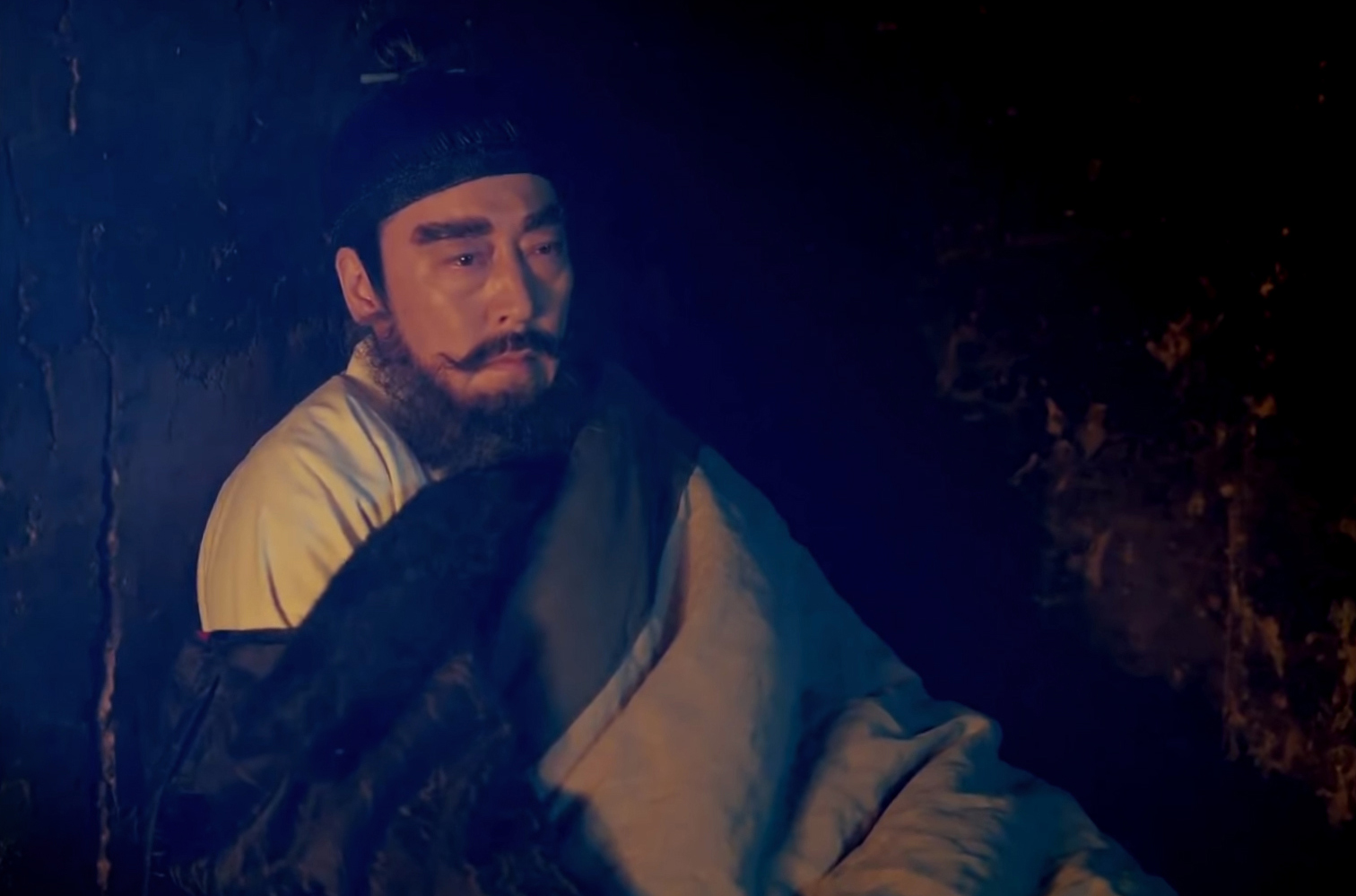
He instructed his son that if Li Shiji hesitated, he should be executed, but if he obeyed immediately, he should be recalled and made chancellor after Taizong's death. After Taizong's passing- Li Shiji departed after his demotion without delay. After Taizong's passing in 649, his son Li Zhi (eventually posthumously named Gaozong Emperor) recalled him and instead promptly rewarded him, and the grateful general served the new emperor faithfully.
Music: A Time For Sons
POSTSCRIPT
The momentum of Taizong's era carried forward into the reign of his son, Li Zhi, the Emperor Gaozong. A well-meaning sovereign, Gaozong's rule was persistently hampered by severe illness; he suffered from debilitating headaches, dizziness, and strokes that often left him incapacitated. In these crises, the full weight of imperial authority was wielded by his exceptionally capable wife, Empress Wu, who would one day be known as Empress Wu Zetian. The court came to refer to them as the "Two Saints," presiding over the state together as she handled affairs in his name.


.jpg)
This period of co-rulership pushed the Tang empire to its zenith, achieving the final subjugation of rivals that had even defied Taizong. Their armies, in alliance with the Korean kingdom of Silla, crushed Baekje in 660 and finally conquered the formidable northern kingdom of Goguryeo in 668. This expansion marked the greatest territorial extent of the Tang, an immense domain of 12.37 million square kilometers. The empire's authority stretched from the Taedong River on the Korean peninsula to the Aral Sea in the west, and from the shores of Lake Baikal in the north deep into northern Vietnam in the south. Tang power even projected into the far west, compelling the vassalage of states in modern Afghanistan.
.png)

Taizong is remembered a force of nature who remade China. His reign laid the foundation for the burgeoning Tang to reach heights China previously undreamed.


➢ ☯ Futsunomitama
➢ ☯ MK Celahir
➢ ☯ Muramasa
➢ ☯ Thomas Vieira
➢ ☯ BurenErdene Altankhuyag
➢ ☯ Stephen D Rynerson
➢ ☯ Peter Hellman
➢ ☯ SunB


Comments