Emperor Profile: Taizu Emperor of Song- Founder of Song Dynasty: 宋太祖短记

.jpg)

Music: Battlefield (Zide Guqin Studio)
This is an excerpt from a larger series regarding various noted Chinese emperors. This short segment in particular briefly covers the context of the founding Taizu Emperor of Song - Zhao Kuangyin.
A RETURN TO FORM


A general who could fight like a demon and govern with unexpected wisdom. He possessed the rare combination of great martial prowess and political wisdom that allowed him to accomplish what generations before him could not: the reunification of a fractured realm and the enduring restoration of lasting peace to the Chinese heartlands. His story is that of a warrior who understood that true strength lies long beyond conquest, but in knowing when to sheath the blade and extend the open hand.

THE RESTORER EMPEROR
The fall of the Tang dynasty in 907 ushered in an era of violent fragmentation known as the Five Dynasties and Ten Kingdoms (907-979). The north saw a rapid succession of five short-lived "dynasties," (most barely longer than 1 dynamic founder) often established by military coups, while the south fractured into more than a dozen competing states. The period saw a nightmarish procession of strongmen, each more ruthless than the last, clawing their way to brief supremacy before being inevitably betrayed and butchered by their own subordinates. Generals murdered emperors, bodyguards turned on masters, and the very concept of loyalty dissolved into expedient self-interest. Though born from humble peasants- Zhao Kuangyin's own father served as a commander in several of these northern dynasties.
%20(1).jpg)
Born from the chaos of a broken realm, the soldier-emperor Zhao Kuangyin was a pragmatic and charismatic leader who ended the cycle of warlordism that had plagued China. He only seize the broken empire but, more importantly, to build a foundation for a dynasty that would last for over three centuries.


Zhao Kuangyin followed his father's path, distinguishing himself as a capable commander in the service of the Later Zhou, the last of the Five Dynasties. His prowess in battle, particularly at the Battle of Gaoping against a Northern Han-Liao alliance where his flank's sucidal holdout action turned the beleagured tide of battle, earned him the trust of Emperor Shizong of Later Zhou. By 959, he was promoted to be the commander of the elite palace guards, a position of immense military authority. When his patron died that same year, he left behind a seven-year-old heir, creating a power vacuum that was all too familiar in that era.

Credit: 浪人刘小黑

In 960, on the pretext of a renewed invasion by the Northern Han and their Khitan allies, Zhao Kuangyin was dispatched with the main imperial army. At a stop in Chenqiao (lit. "Chen Bridge") station- twenty kilometers from the capital, his troops mutinied. They stormed his tent, draped a yellow imperial robe over his shoulders, and declared him emperor.
.jpg)
Though official histories portray a reluctant Zhao being forced onto the throne, the event was likely a well-orchestrated coup by his inner circle. He quickly secured a pledge from his men to not harm the child emperor or his mother and to refrain from looting the capital. With the gates of the capital Kaifeng opened by allies, Zhao Kuangyin ascended the throne with no resistance, establishing the Song Dynasty.
REUNIFICATION
.jpg)
As emperor, Zhao Kuangyin (Taizu), faced the monumental task of reunification. In a famous discussion with his chief advisor, he laid out the "first south, then north" strategy. The plan was to first subdue the weaker, but wealthy, kingdoms of the south before confronting the formidable Northern Han and their powerful Liao patrons in the north. The strategy was executed with methodical precision. Over the next decade and a half, the Song armies swept across the south. Taizu's approach was a mix of overwhelming military force and gracious diplomacy.
.jpg)

Previous unsuccessful Northern dynasty stratagems often focused on crushing their northern rivals then sweep south after the whole of north had been pacified. The results were disappointing, the northern dynasties fought against the small but highly militarized state of Northern Han (sponsored by Khitan Liao) many times and was unable to overrun it. However Zhao Kuangyin shifted this plan. Instead, the Song veered south and began to forcibly integrate or annex the various much weaker southern kingdoms. The plan worked well and after 2 decades of war all were either defeated or surrendered.
.jpg)

Taizu's most celebrated act of political wisdom was "removing military command over a cup of wine." Fully aware that he himself had come to power through a military coup, he was determined to end the cycle of warlordism. In 961, he invited his most powerful generals to a banquet. There, he frankly expressed his anxiety, stating that he could not sleep peacefully knowing they held the power to do to him what he had done to the Later Zhou. He persuaded them to relinquish their commands in exchange for honorary titles, generous pensions, and vast estates, securing their retirements with wealth and honor rather than the sword. This single act effectively centralized military authority under the emperor and dismantled the regional power bases that had torn the Tang apart.
%20(1).jpg)

AN UNTIMELY END & A BROTHER'S SHADOW
Despite his successes in unifying the south and consolidating power, Taizu's reign came to an abrupt and mysterious end in 976 at the age of 49. The official account is silent on the cause of death, but popular lore speaks of "shadows by the candle and sounds from an axe." The story suggests that on a snowy night, Taizu was drinking with his younger brother, Zhao Guangyi, when he suddenly died.
What followed fueled centuries of suspicion. The throne passed not to Taizu's two adult sons, but to his brother, who became Emperor Taizong. While a "deathbed promise" to their mother was later produced to legitimize the succession citing the frailty of young heirs thus favoring a senior regent as inheritor, its authenticity is highly debated by historians. The fact that Taizu's sons both died young and under suspicious circumstances during Taizong's reign only deepened the mystery.

Emperor Taizong completed the unification his brother had started, conquering the Northern Han in 979. However, his character and rule differed from Taizu's. Where Taizu was a martial emperor, Taizong increasingly relied on civilian scholar-officials, futher solidifying the 重文轻武 "Emphasis on civil affairs and de-emphasis on military affairs" (or "emphasis on civil affairs and suppression of military affairs") policy that would define the dynasty by centralizing military power entirely under the imperial umbrella.

禁軍 jinjun lit: The Forbidden Army. The Song military ensured that the court can outmatch any other regions of the realm. The Song Forbidden Army had three units. Initially there were two the Palace Guard Command 殿前侍卫司, then the the Metropolitan Command 侍卫亲军马步司. Soon however the Metropolitan Command was subdivided into the Metropolitan Cavalry Command and the Metropolitan Infantry Command. Together they were commanded under three marshals (sanshuai 三帅). To retain the primacy of the court, only the Emperor can simultaneously command the 3 units. During the Northern Song, half of the empire's army of 1 million soldiers was stationed in and around the imperial capital of Kaifeng, with the best being elite palace guards and metropolitan armies which formed the core of the imperial forces.
%20(1).jpg)


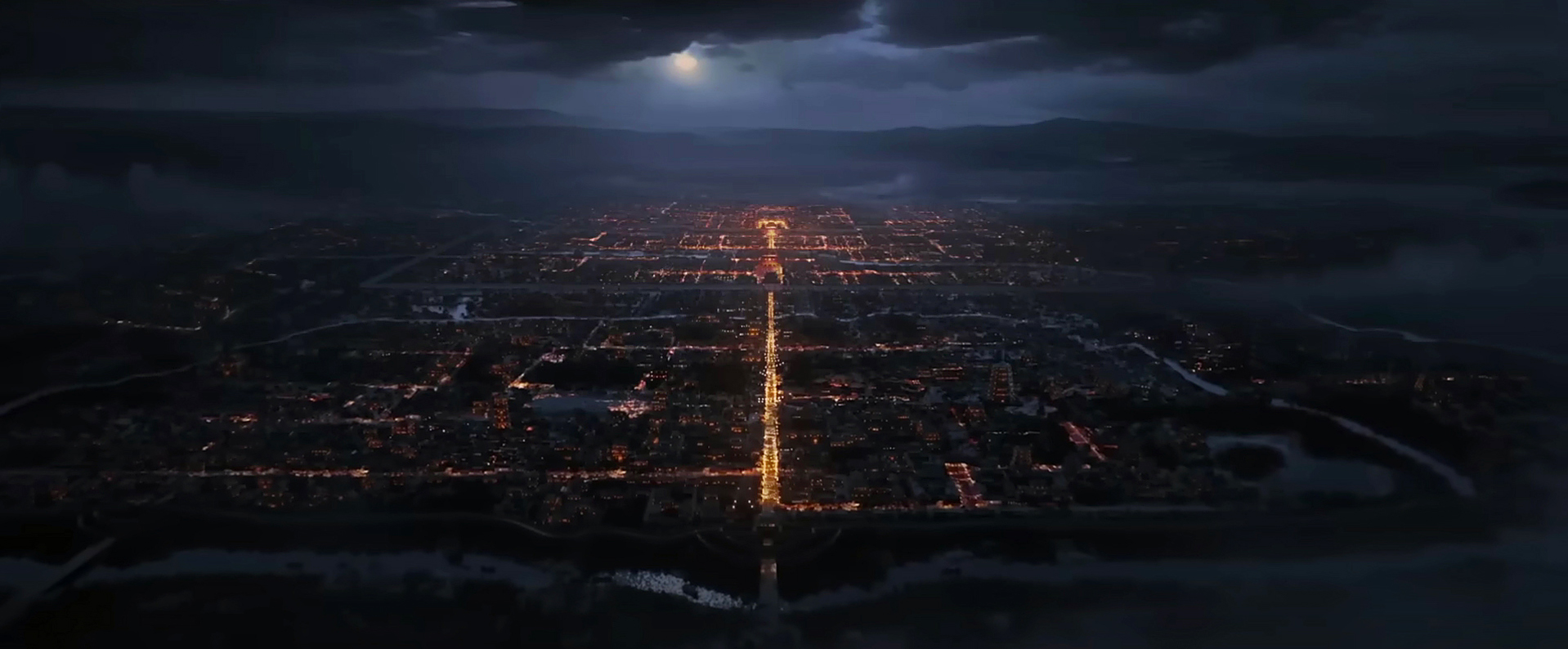
Northern Song capital Kaifeng. During the Song commerce and learning blossomed across the realm. Technologically Song dynasty took China to new heights. Though externally hammered by persistent rivals, Northern Song China's population doubled in size between the 10th and 11th centuries. What's more with internal stability its economy exploded and flourished to immense levels, Song dynasty became the richest state in the world, as well as continuously one of the most scientifically advanced.
The Song dynasty's organization was highly centralized with much of the power reserved in the imperial court- (thus its civilian government helmed by scholar- officials.) This footing came at a cost to the initiative of its military commanders, who were often subjected to rigorous imperial oversight. However this posture is logical considering the prior 7 decades of high warlordism and civil war.


Northern Song dynasty at a glance: Northern Song (Red) and its 2 main regional rivals: the Khitan- led Liao Dynasty (Gold) to its northeast, and the Tangut- led kingdom of Xixia (lit. "Western Xia": in Gray) in the northwest. All 3 were major players by the end of 7 decades of post- Tang civil war and anarchy known as the Five Dynasties and Ten Kingdoms. During these times, the already strong Khitans in the northeast gained momentum and made ambitious forays into central China. It was also at these times Xixia made their ambitious bid in the west.

Taizong's attempts to reclaim northern territories from the Liao dynasty ended in disastrous defeats, same with his ambitious to restore Vietnam back to Chinese orbits- leading the Song to adopt a more defensive and inward-looking foreign policy. In hindsight, the reigns of the two brothers set the stage for the Song dynasty's unique character. Taizu, the warrior, restored unity and broke the power of the warlords, creating internal stability. Taizong, the administrator, built upon this by establishing a powerful civilian bureaucracy and fostering an environment for immense economic and cultural prosperity. Together, they forged a dynasty that, while often beleaguered by powerful northern enemies, presided over one of China's most brilliant eras of scientific and cultural achievement.


➢ ☯ Futsunomitama
➢ ☯ MK Celahir
➢ ☯ Muramasa
➢ ☯ Thomas Vieira
➢ ☯ BurenErdene Altankhuyag
➢ ☯ Stephen D Rynerson
➢ ☯ Peter Hellman
➢ ☯ SunB
.jpg)


Comments